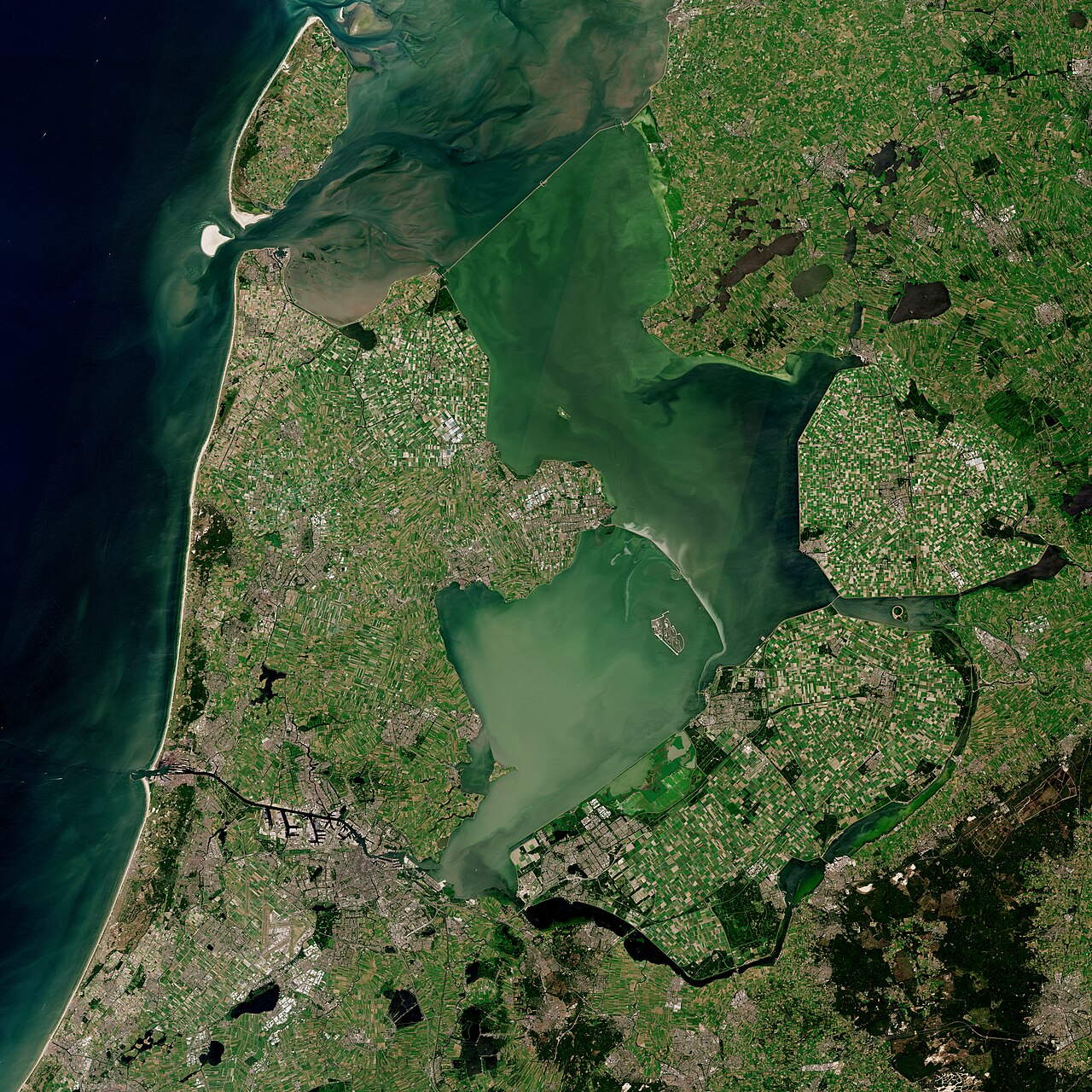
The IJsselmeer's Epic Journey: From Salty Sea to Sweet Sanctuary
Imagine a vast body of water, once a bustling marine ecosystem teeming with saltwater fish, now a serene freshwater lake, vital for an entire nation. This isn't a mere geological shift over millennia, but a dramatic transformation engineered by human ingenuity in less than a decade. We're talking about the IJsselmeer, the largest lake in the Netherlands, whose captivating story continues to intrigue locals and visitors alike. The burning question for many contemplating this Dutch marvel is:
Is het IJsselmeer zoet of zout? The answer reveals a fascinating tale of ambition, engineering prowess, and ecological adaptation.
The Genesis of a Saltwater Realm: From Flevomeer to Zuiderzee
To truly appreciate the IJsselmeer's current state, we must first journey back in time, long before its current name graced the maps. The area that is now the IJsselmeer was once part of a much older freshwater lake known to the Romans as Flevomeer. However, nature had other plans. Over centuries, particularly during the early 13th century, a series of powerful storm surges and floods breached the natural barriers, allowing the North Sea to surge inland. This influx of seawater gradually transformed the Flevomeer into a sprawling, dynamic inland sea – the Zuiderzee.
The Zuiderzee, meaning "Southern Sea," was a significant feature of the Dutch landscape for centuries. It was a productive saltwater environment, renowned for its rich fishing grounds where various marine species thrived, providing livelihoods for numerous coastal communities. Its waters ebbed and flowed with the tides, connecting the heart of the Netherlands directly to the vast expanse of the North Sea. This intimate connection to the ocean defined its character, making it unequivocally a saltwater body, a bustling hub for trade, fishing, and a constant reminder of the sea's powerful presence within the low-lying nation.
The Afsluitdijk: A Nation's Bold Stroke to Tame the Sea
The 20th century, however, brought with it a visionary plan to fundamentally alter this ancient landscape. Driven by the twin desires of protecting the vulnerable lowlands from devastating floods and reclaiming land for agriculture, the monumental Zuiderzee Works project was conceived. At its heart was the construction of the Afsluitdijk – a colossal, 32-kilometer-long dam that would permanently separate the Zuiderzee from the Wadden Sea and, by extension, the North Sea.
On May 28, 1932, a pivotal moment in Dutch history occurred as the last gap in the Afsluitdijk was closed. This engineering marvel effectively cut off the Zuiderzee from its saltwater source. While the completion of the dike marked the physical separation, the official name change from the enclosed part of the Zuiderzee to the IJsselmeer (named after the IJssel River, which flows into it) took place a few months later, on September 20, 1932. This act of human will transformed an open, tidal sea into an enclosed basin, setting the stage for an unprecedented ecological shift.
The Great Desalination: How the IJsselmeer Became Fresh
With the Afsluitdijk firmly in place, the newly formed IJsselmeer was initially still a body of saltwater, a legacy of its Zuiderzee past. However, its fate was sealed by the continuous influx of freshwater. The primary contributors were the powerful IJssel River, a major distributary of the Rhine, and to a lesser extent, the Overijsselse Vecht. With no new saltwater flowing in from the North Sea and freshwater constantly pouring in, the natural process of desalinization began.
This wasn't an instantaneous change but a gradual, fascinating transformation. Within the first year, the water became brackish – a mix of fresh and salt. But the relentless flow of river water proved overwhelming. By 1934, just two years after the closure of the Afsluitdijk, the IJsselmeer was almost entirely desalinated. The ecological consequences were profound: saltwater marine life gradually disappeared, replaced by freshwater species. A new biological equilibrium began to form, a process largely complete by mid-1939. Today, if you ask "Is het IJsselmeer zoet of zout?", the definitive answer is
sweet, or fresh. Unlike the North Sea, which is distinctly salty, the IJsselmeer contains no salt, making it an entirely freshwater lake. This remarkable transition underscores the incredible power of sustained hydrological management. To delve deeper into this hydrological marvel, read our related article:
Is the IJsselmeer Fresh or Salt? Unveiling its Hydrological Secrets.
A Lifeline for the Lowlands: The IJsselmeer's Crucial Freshwater Role
Today, the IJsselmeer is far more than just a historical curiosity; it is a vital organ in the Netherlands' sophisticated water management system. Often referred to as the "rain barrel" of the Netherlands, it collects vast quantities of freshwater, primarily from the Rhine via the IJssel, and then distributes it across a significant portion of the country.
Hydrological Management: A Balancing Act
The water levels in the IJsselmeer are meticulously managed by Rijkswaterstaat, the Dutch Directorate-General for Public Works and Water Management. There are distinct summer and winter levels, reflecting the varying demands and environmental conditions. During summer, when agricultural irrigation needs are high and evaporation rates increase, the water level is maintained at approximately 0.20 meters below NAP (Normaal Amsterdams Peil, a reference level similar to sea level). In winter, this level is lowered to about 0.40 meters below NAP to create storage capacity for potential high river discharges. This careful balancing act ensures sufficient supply while also preventing flooding.
Discharge and Distribution
Excess water from the IJsselmeer is discharged into the Wadden Sea through two impressive sluice complexes: the Stevinsluizen near Den Oever and the Lorentzsluizen near Kornwerderzand. This "spuien" (discharging) primarily occurs during low tide (ebb) in the Wadden Sea, when the water level there is lower than in the IJsselmeer, allowing gravity to do most of the work.
Beyond discharge, the IJsselmeer serves as a critical source for various regions. Water is strategically diverted to supply provinces like Friesland and Groningen for agricultural use, to combat salinization in polders across Northwest Netherlands, and for industrial purposes. Crucially, it is also a primary source for drinking water production, as seen in facilities like Andijk. This freshwater provision is indispensable for sustaining both human populations and the diverse ecosystems within these areas. The IJsselmeer's role as a freshwater hub is unparalleled, making it truly a strategic national asset. Discover more about its importance in our article:
IJsselmeer: Why This Dutch Lake is Crucial for Freshwater Supply.
Future Challenges and Sustainable Management
While the IJsselmeer stands as a testament to successful water management, it is not without its challenges, particularly in the face of a changing climate. The primary threat to its freshwater function is the increasing risk of salinization, especially during prolonged periods of drought.
The Threat of Salinization
During dry summers, when river inflows are significantly reduced and the demand for freshwater for irrigation and combating salinization in coastal areas remains high, the IJsselmeer's water levels can drop. This creates a vulnerability: at the sluice complexes in the Afsluitdijk, particularly near Den Oever, there's a risk of saltwater intrusion from the Wadden Sea. This happens through complex hydrological processes during sluicing or even seepage. If the freshwater buffer in the IJsselmeer were to become increasingly brackish, it would severely compromise its ability to serve as a reliable source for agriculture and drinking water, with potentially devastating economic and ecological consequences.
Adapting for the Future
To counteract these threats, continuous monitoring and adaptive strategies are paramount. This includes:
- Improved Forecasting: Better climate models to predict periods of drought and high water demand.
- Smart Water Distribution: Optimizing how and when water is released to different regions to maximize efficiency and minimize waste.
- Technological Innovations: Research into advanced sluice designs that further minimize saltwater intrusion, or even explore methods for localized desalination if absolutely necessary (though prevention is always preferred).
- Public Awareness: Educating farmers and citizens on water-saving practices to reduce overall demand.
The IJsselmeer's future as a freshwater lifeline depends on a proactive and integrated approach to water management, one that balances human needs with environmental sustainability in an era of climatic uncertainty. It's a continuous balancing act between protection, distribution, and adaptation.
Conclusion
The story of the IJsselmeer is a compelling narrative of transformation, a monumental shift from a thriving saltwater inland sea to a freshwater beacon. The initial question, "Is het IJsselmeer zoet of zout?", has a clear answer today: it is definitively fresh. This metamorphosis, driven by the engineering marvel of the Afsluitdijk, has reshaped the ecological landscape and profoundly influenced the socioeconomic fabric of the Netherlands. Beyond its historical significance, the IJsselmeer remains an indispensable freshwater reservoir, a testament to Dutch resilience and innovation in battling the forces of nature. As climate change presents new challenges, the ongoing preservation and sustainable management of this vital lake will continue to be a cornerstone of the Netherlands' relationship with water, ensuring its freshwater legacy for generations to come.